Half of what a kitchen throws out was cooked and never served.
Half Pan is a free app that helps kitchen crews see that food, weigh it, and make less of it.

Our mission
Show every kitchen crew what it throws out, and give them one thing to change about it each shift.
The people who decide how much rice to cook are on the line, not in an office. If they never see the number, nothing changes. So Half Pan gives the number to them, at the start of every shift.
The goal
A quarter less food in the trash within a year, at every kitchen that uses Half Pan.
That number comes from a 2019 study for Champions 12.3. At 114 restaurants in 12 countries that started programs to reduce food waste, kitchen waste fell 26% on average in the first year, and the restaurants saved $7 for every $1 they put in.1
The study's first two steps for restaurant managers are to measure the waste and to get the staff involved. Half Pan is built to do both. Published kitchens show their numbers here, with every missed log counted, so anyone can check how it's going.
Where the waste comes from
In a restaurant, most wasted food never reaches a customer. Leanpath puts it at 4 to 10% of everything a kitchen buys.2
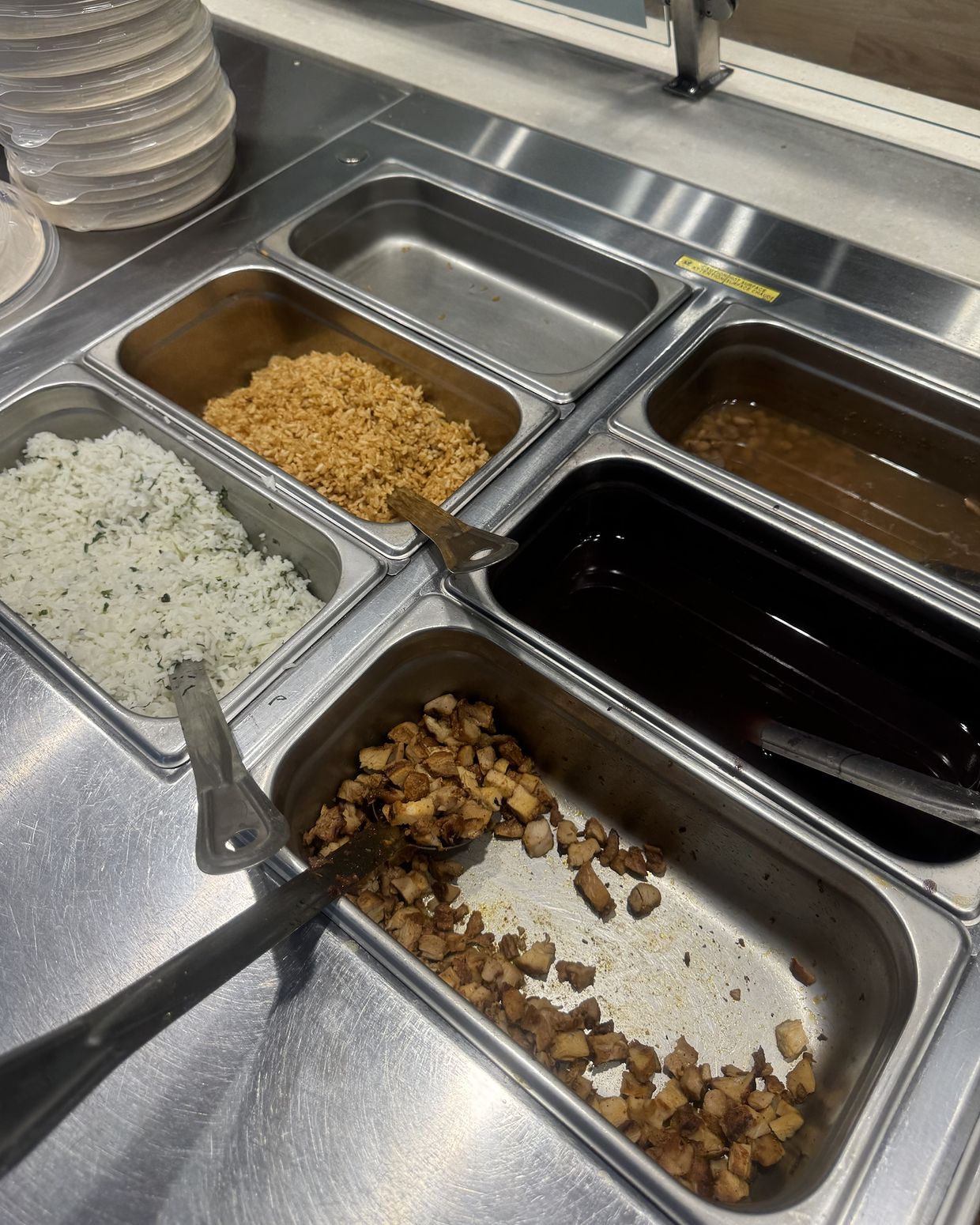
Half of that is overproduction: rice and proteins cooked ahead for a rush that never came, then held until they had to be thrown out.2 The rest is spoilage in the walk-in, prep trim, things that get dropped, and what comes back on plates.
Usually nobody is being careless. It happens because nobody counts it.
Why it keeps happening
Most of it comes down to how kitchens work, more than to any one cook.
- Running out in front of a customer feels worse than throwing food away, so lines cook extra just in case.
- New cooks learn by copying whoever trained them, habits included.
- Training usually covers speed and food safety. Waste rarely comes up.
- Nobody sees the total. It leaves with the trash at close.
Half Pan goes after the last one first. Once the crew sees the number every shift, the other three are easier to talk about and fix.
What Half Pan does
The crew weighs food before it goes in the trash and taps what it was and why. Every shift starts with last shift's number and one thing to try. Short booklets teach the six reasons food gets thrown out, the fix for each one, and how to hold and share food safely. Kitchens that want to can publish their numbers here.
How we keep it honest
- Every number shows how many of the expected logs came in. A missed log shows up as missed, never as a zero.
- The app never names or ranks anyone on the crew. The scale measures the kitchen, not the person.
- Each kitchen decides whether to publish its numbers, and under what name.
- It's free, and there are no ads.
Who started it
Sai Vajaha, in Hoover, Alabama. The first kitchen is the Qdoba his dad runs there.
Notes
- The Business Case for Reducing Food Loss and Waste: Restaurants, Champions 12.3 (WRI and WRAP), 2019. Back
- 6 stats that illustrate the crisis and opportunity of food waste in foodservice, Leanpath. Back